Houdini Horse, part 3
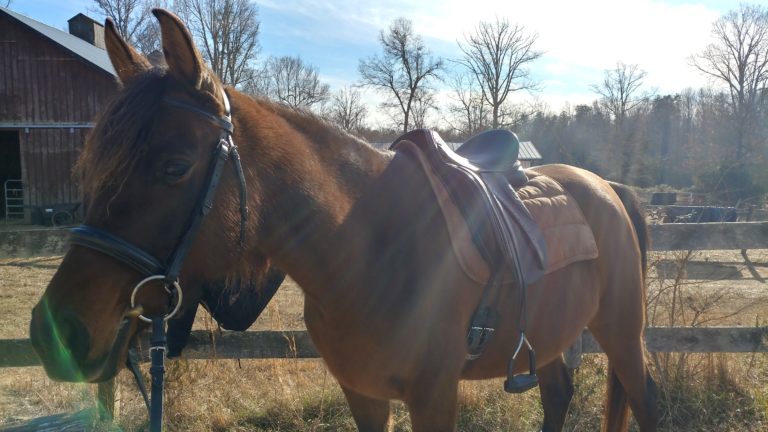
We’ve had some cold weather, so Isis is in a small pasture with grass. Her grazing muzzle is put on every morning. Her new pasture has only a little grass in it, most of it is that light shade of tan that happens after several heavy frosts. The diet paddock she had been in had turned into a mud pit and she was started to get scratches on her heels.
She has been out for about three weeks on partial turnout (day-time only). She has had her grazing muzzle on her full time. Had it on does not mean that it has been effective.
Miss Houdini Horse has figured out how to get it off almost every day. It doesn’t matter what we do with the muzzle, she still gets it off. She has learned how to catch the muzzle on objects and pull it down so either the emergency release breaks or it comes off over her nose.
Additional smaller paddocks are being built for Isis. Ths field Isis is currently in is being divided into two smaller paddocks where she’ll be able to be turned out with minimal grass. The grass in this pasture is very low as it is, but it doesn’t seem to make a difference.
She is still gaining weight. The weight tape doesn’t incidate that it’s more than 16 pounds (969 to 985). However, her crest is larger as are the fat pads along her neck, back, and rump.
I am making more time to work her. I’ve gone out several times this past week during lunch and have ridden and lunged her. This week she has been worked five times, probably a record for me. I just don’t know if it will be enough. As long as it doesn’t rain, I’ll be out there working her.
Here’s hoping that it’s enough to prevent another laminitic episode…
This month’s Equus has an article on page 29 called “A Case of Insulin Resistance: How a common but little-known condition similar to Type II diabetes triggered a painful and frustrating episode of laminitis” by Susan Kauffmann. Physical signs for horses who might be at risk include abnormally distributed fat: crest, whithers, and croup. The horses they have pictured are strikingly similar to Isis’ shape.
Does this mean that Isis has insulin resistance? I don’t know. It’s worrisome because those pictures of horses with this condition really looked like Isis. I’ve asked my vet if we should test Isis.

One Comment